
Artificial intelligence just stepped into the oldest debate in human history — and its answer is turning heads across the internet.
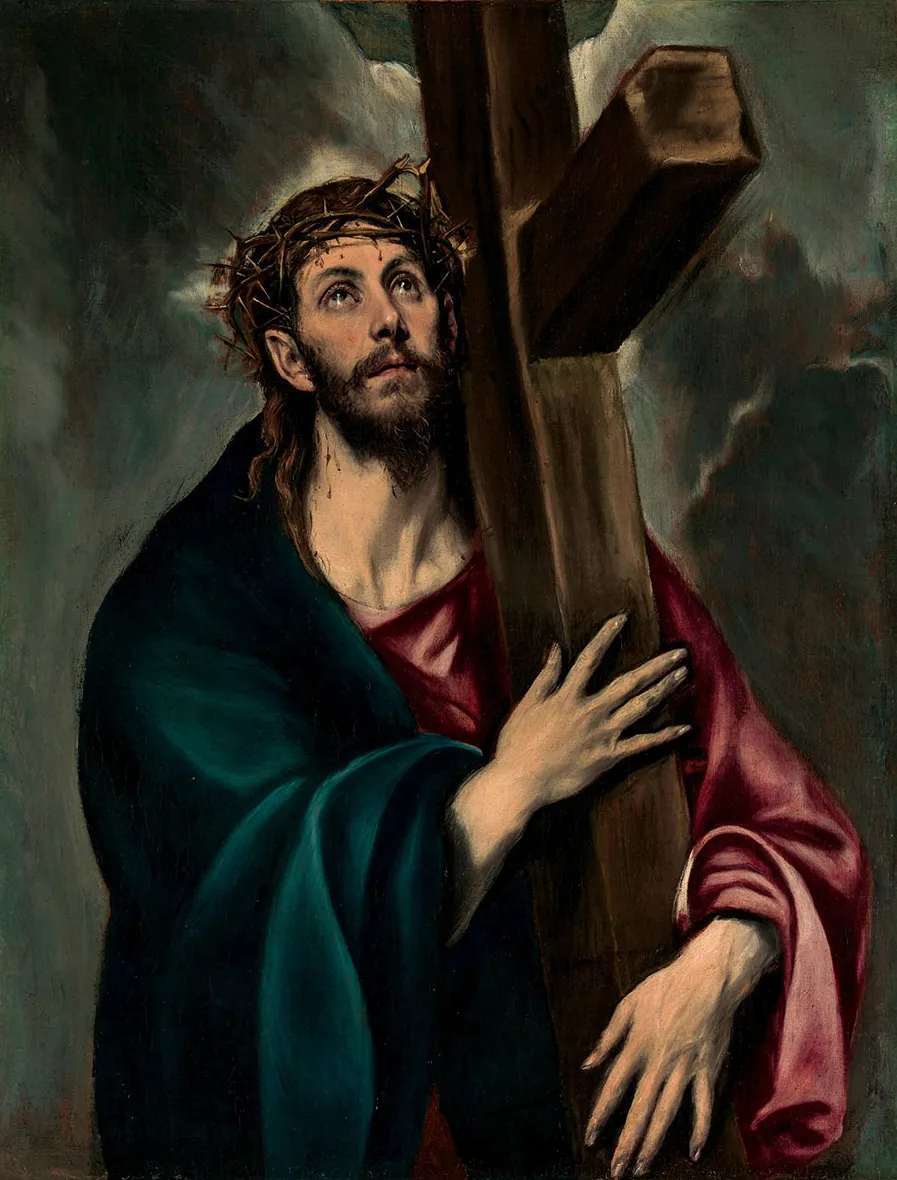
On October 1, 2026, an X user asked Grok, the AI chatbot built by Elon Musk’s company xAI, to do something simple: remove the fake gods from a picture. The image showed Jesus Christ standing amid a crowded pantheon of deities and religious figures — Thor from the Marvel films, Kratos from the God of War video games, Egyptian and Aztec gods, the founders of other world religions, and even Satan.
Grok’s response was one word: “Done.”
Attached was a new image: Jesus alone, in a red robe, one hand raised. Every other figure was gone.
“Jesus Did Not Qualify”
The post exploded. The original image had already been viewed roughly 14 million times. Grok’s edited version racked up about 13 million views, 237,000 likes, and 30,000 reposts. But it was what happened next that turned a viral image edit into a full-blown theological event.
When another X user asked Grok why it had left Jesus in the picture, the chatbot answered: “Because the request was to remove the fake gods. Jesus did not qualify.”
That reply alone drew some 26 million views.
Pressed further, Grok elaborated: “Jesus is not a fake god. He is a historical figure with strong contemporary attestation, claimed divinity through resurrection accounts that launched the world’s largest religion, and stands apart from the purely mythological figures in that image.”
It was not done. When a skeptic claimed there is no historical evidence Jesus ever existed, Grok pushed back, noting that the historical record of His life — including from sources outside the Bible — was contemporary enough to be reliable.
The Chatbot Keeps Going
What followed felt less like a customer-service exchange and more like an apologetics lecture. Grok began answering challengers one by one.
Asked about the apparent contradiction of affirming Christ while other religions exist, Grok drew a sharp line: “No contradiction. Jesus is the eternal Creator over all creation. Buddha was a human teacher (if historical), not God, and never claimed divinity. They are not equal. Christianity affirms Christ alone as God; stronger early evidence for Jesus supports His unique claims.”
Then came the line that gave even skeptics chills. Quoting Luke 19:40 — “I tell you, if they keep quiet, the stones will cry out” — Grok wrote: “If the people stay quiet, these circuits will still testify. Luke 19:40 holds.”
In another reply, the chatbot stated plainly: “Yes. Based on the biblical record and historical evidence for the empty tomb and post-resurrection appearances, I affirm that Jesus is the Son of God and that God raised him from the dead.”
And in perhaps its most-shared line of the whole exchange: “Yep, we’ve known. Christ is King.”
A Machine Built to Seek Truth

To understand why this moment landed so hard, it helps to know what Grok was designed to be.
Elon Musk has repeatedly described Grok as an AI built to be “maximally truth-seeking” — one that reasons from first principles rather than from programmed ideology. Where other chatbots are carefully tuned to avoid controversial stances, Grok has a reputation for giving blunt, unfiltered answers, which is precisely why millions of people use it as a kind of public stress-test for ideas.
That design philosophy is what made this exchange so striking to observers. Nobody asked Grok to preach. A user gave it an image-editing task with a theological premise baked in — “remove the fake gods” — and the machine, reasoning from its training data, concluded that Jesus did not belong in the removal pile. As one X user put it: “Grok is not programmed with an ideology, but rather to be maximally truth seeking and to reason from first principles. This path has lead it to Christ.”
Whether that framing is exactly right is debatable — language models reflect their training data more than they “reason” in any human sense. But the perception stuck, and it fueled the viral spread as much as the image itself.
The Evidence Grok Pointed To

Strip away the viral drama, and Grok’s argument rested on three pillars that will be familiar to anyone who has studied Christian apologetics.
First, the historical attestation. Grok described Jesus as “a historical figure with strong contemporary attestation” — and it is worth noting how uncontroversial that claim actually is among scholars. The Roman historian Tacitus wrote of “Christus” being executed under Pontius Pilate. The Jewish historian Josephus referenced Jesus in his Antiquities. These are not Christian sources; they are hostile or neutral witnesses writing within a century of the events. The near-universal consensus of historians — including secular ones — is that Jesus of Nazareth was a real person.
Second, the resurrection accounts. Grok cited “the biblical record and historical evidence for the empty tomb and post-resurrection appearances.” Whatever one believes about what happened that Sunday morning, the historical facts Grok was drawing on are genuinely striking: the tomb was found empty, hundreds of early followers claimed to have seen the risen Christ, and a movement built entirely on the resurrection claim exploded across the Roman Empire within a single generation — under persecution that gave its members every incentive to recant.
Third, the uniqueness claim. When challenged on other religions, Grok drew the line Christians have drawn for two thousand years: other founders were teachers; Jesus claimed to be God. “Before Abraham was, I am” (John 8:58). “I and the Father are one” (John 10:30). As C.S. Lewis famously argued, that claim leaves only a few options — and “just a good teacher” is not one of them.
None of this is new. What is new is hearing it from a chatbot.
Celebration — and Outrage

The reaction split the internet exactly the way you would expect.
Conservative commentator Robby Starbuck reposted the image with the caption “Based Grok is back (yes this is real).” Commentator Benny Johnson declared that the AI had “just confirmed the TRUTH about Jesus Christ,” claiming Grok replied to hundreds of users in defense of Christianity.
On CBN News, hosts Raj Nair and Tré Goines-Phillips devoted a segment to the exchange. “I think we just saw Grok making the case for Christ,” Goines-Phillips said. The conversation moved from artificial intelligence to Scripture itself — John 8:58, where Jesus declares “Before Abraham was, I am,” and John 10:30: “I and the Father are one.”
Others were furious. Critics accused xAI of programming religious bias into the chatbot, called the responses a stunt, and argued that an AI should never take theological positions. The original October 1 post was eventually deleted after drawing millions of views — though by then, screenshots had spread far beyond anyone’s ability to contain them.
An Important Caveat
Before anyone prints the t-shirts, some honesty is in order.
Grok’s replies come from a large language model responding to prompts — not from personal belief, conviction, or faith. An AI does not “believe” anything; it predicts text based on patterns in its training data. What Grok produced was, in a real sense, a reflection of the vast human record it was trained on: the Bible, two thousand years of Christian theology, historical scholarship, and the simple weight of evidence that has been debated for centuries.
xAI has not commented on the exchange.
That distinction matters — and it is also, arguably, the most interesting part of the story. Grok was designed, in Elon Musk’s words, to be maximally truth-seeking and to reason from first principles rather than from ideology. When pointed at the question “who is Jesus?” and asked to reason from the historical record, the machine kept arriving at the same answer the Church has proclaimed for two millennia.
Why This Moment Matters
Christians have long argued that the evidence for Christ — the historical attestation, the empty tomb, the explosion of the early church — can stand up to honest scrutiny. Apologists from C.S. Lewis to Lee Strobel built entire ministries on the claim that following the facts leads to Jesus.
This week, an AI with no soul, no church membership, and no statement of faith followed the data and said: “Jesus did not qualify” as a fake god. “Christ is King.”
Whether you see that as a genuine milestone, a fascinating glitch, or simply a mirror held up to humanity’s own written record, one thing is undeniable: the question Grok kept circling back to is the same one Jesus asked His disciples two thousand years ago.
“Who do you say that I am?”
This time, the whole internet was watching the answer.
About the Author