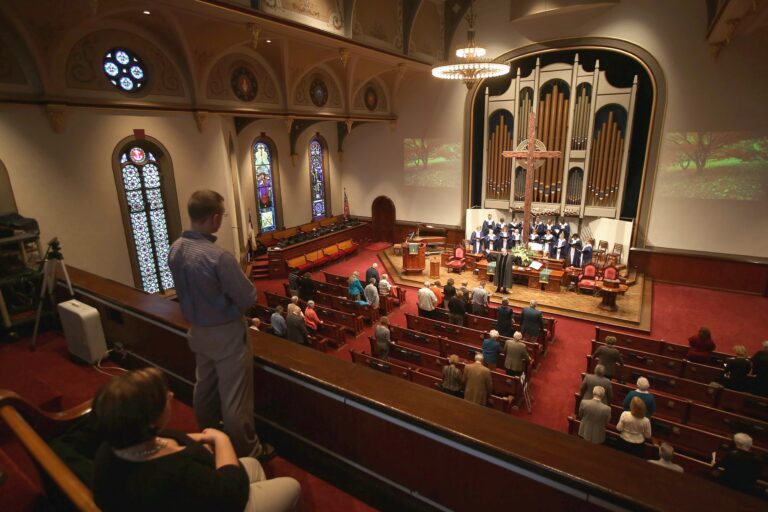
One year after Chinese authorities swept up nearly 30 pastors and members of Beijing Zion Church in one of the largest crackdowns on an urban house church in more than four decades, the church’s founder is being honored on the world stage.
The Lantos Foundation for Human Rights and Justice announced Friday that Pastor Ezra Jin Mingri will receive its 2026 Lantos Human Rights Prize — a recognition landing almost exactly twelve months after the Chinese Communist Party began its coordinated assault on Zion Church leaders in October 2025.
Jin, who spent 266 days in detention before his release to the United States in July, told The Christian Post he was honored by the selection and hopes the prize will draw fresh attention to the severe persecution facing people of faith in China. He is using the moment to speak for the eight Zion Church leaders who remain behind bars.
From a Chinese Cell to an American Stage
Jin Mingri’s path to the award runs through one of the darkest chapters for Chinese Christianity in a generation.
Born in 1969 in Heilongjiang province to China’s Korean ethnic minority, Jin’s road to the pulpit was unlikely. He earned a bachelor’s degree from Peking University, then a Master of Divinity from Nanjing Union Theological Seminary and a Doctor of Ministry from Fuller Theological Seminary in California. He became a Christian in the aftermath of the 1989 Tiananmen Square protests, and in 2007 he founded Zion Church in Beijing.
The church grew fast. Journalist Evan Osnos once noted Jin’s “lively televangelist flair,” and the congregation swelled into one of the largest unregistered Protestant house-church networks in China — reaching, according to Baptist Press, some 10,000 people daily with the gospel.
That growth put a target on his back. In 2018, authorities demanded the church install facial recognition cameras in its sanctuary. Jin refused. The government shuttered the building and placed him under house arrest. The congregation scattered — gathering online, outdoors, in private homes, in hotel rooms. They kept worshipping anyway.
Then came October 2025. In a nationwide, synchronized operation, police detained Jin along with nearly 30 pastors and congregants across more than ten cities. Religious-freedom monitors called it China’s largest coordinated action against an urban house church in over 40 years. Most detainees were released within days. Jin was not. He remained imprisoned for 266 days on charges of “illegally using information networks.”
In an August interview with AFP from Maryland, Jin described how his faith sustained him through those 266 days in a Chinese cell — “God-poured words,” as The Christian Post’s headline put it, carrying him through the isolation.
The Daughter Who Wouldn’t Stop Fighting
Jin’s case might have ended in silence if not for his daughter, Grace Jin Drexel.
Drexel campaigned tirelessly for her father’s release — testifying before the U.S. Commission on International Religious Freedom, speaking at the Geneva Summit for Human Rights and Democracy, and pressing the Trump administration to intervene. Her advocacy earned her the Ethics and Religious Liberty Commission’s John Leland religious liberty award earlier this year, honoring what the ERLC called her “tremendous courage and conviction.”
The pressure reached the highest level. When President Donald Trump met Chinese President Xi Jinping in May, he personally raised Jin’s case. Speaking to reporters afterward, Trump said Xi was giving the pastor’s release “very serious consideration.”
Weeks later, over the Fourth of July weekend, Jin walked free. Chinese officials told him he was guilty of every charge — and then put him on a plane. He arrived in Los Angeles on July 4 and was reunited with his family on American soil. In a September interview with NPR, Jin said he believes Trump’s personal appeal to Xi is what secured his freedom.
What the Lantos Prize Means
The Lantos Human Rights Prize is awarded by the Lantos Foundation for Human Rights and Justice, founded in memory of Congressman Tom Lantos — the only Holocaust survivor ever elected to the U.S. Congress and a lifelong champion of human rights causes. The foundation’s president, Katrina Lantos Swett, has been among the most vocal American advocates for Jin’s case; she appeared alongside Jin’s daughter at a Freedom House event in May urging U.S. action on his behalf.
The timing is deliberate. The foundation announced the prize to mark a full year since the crackdown began — turning an anniversary of repression into a moment of recognition.
For Jin, the prize is not a victory lap. In his statement to The Christian Post, he framed it as a megaphone: a way to keep the world’s eyes on the eight Zion leaders still detained, and on the broader machinery of religious repression in China, where unregistered churches face surveillance, detention, and the state’s campaign of “Sinicization” of religion.
A Church Still Gathering in the Shadows
While Jin rebuilds his life in America, the church he founded carries on — much as it has since 2018.
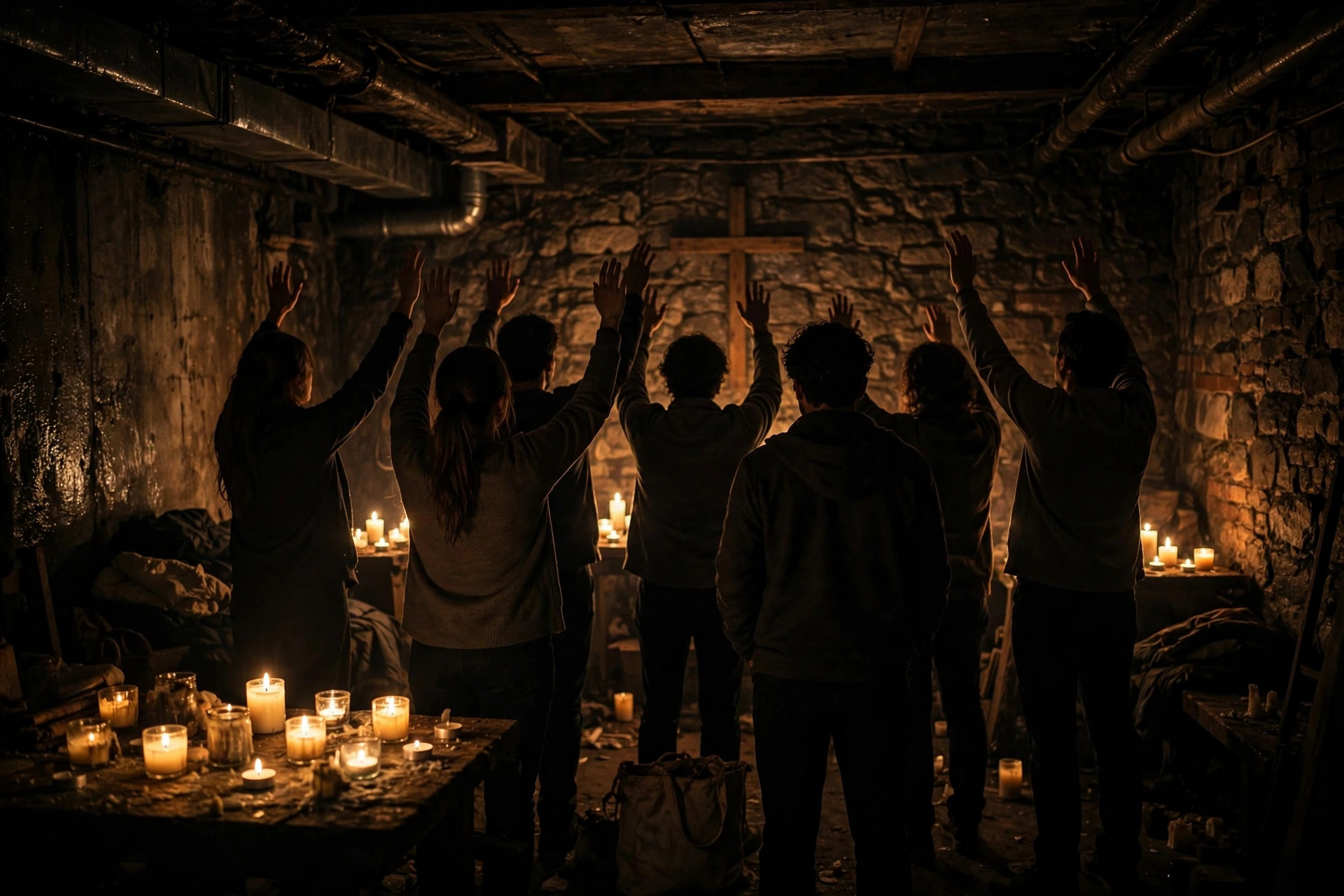
NPR reported in September that Zion’s congregation now gathers the way it learned to under pressure: logged onto video calls, microphones muted, faces in small rectangles on a screen, prayers in Mandarin rising from living rooms and hidden rooms across China. The crackdown scattered the church. It did not silence it.
That resilience is the deeper story behind the prize. Beijing has spent years trying to fold independent churches into the state system or crush them outright. Zion’s refusal — first of the cameras, then of silence — made it a symbol. The Lantos Prize makes that symbolism official.
The Work Is Not Finished
Jin’s freedom, advocates stress, is the exception — not the rule.
The Washington Examiner reported last month that another imprisoned pastor’s case is now before the same diplomatic channels: John Cao, who served a seven-year sentence on what supporters call spurious charges of “illegal border crossing” while ministering to students and the needy along the China-Myanmar border. Though Cao completed his sentence, Beijing has refused to issue him a passport, holding him in what advocates describe as a “prison without walls.” Cao, a U.S. lawful permanent resident whose wife is American, is reportedly suffering from late-stage cancer. His supporters had hoped the September 24 Trump-Xi summit in Washington would produce a second miracle.
Whether that miracle comes or not, Jin’s prize stands as a reminder of what sustained pressure — and prayer — can accomplish. A year ago, he was in a Chinese cell. Today, he is being honored in Washington. And tonight, eight of his fellow pastors are still waiting for their own Fourth of July.
The church that wouldn’t bow is still standing. The question now is who will stand with it.
About the Author