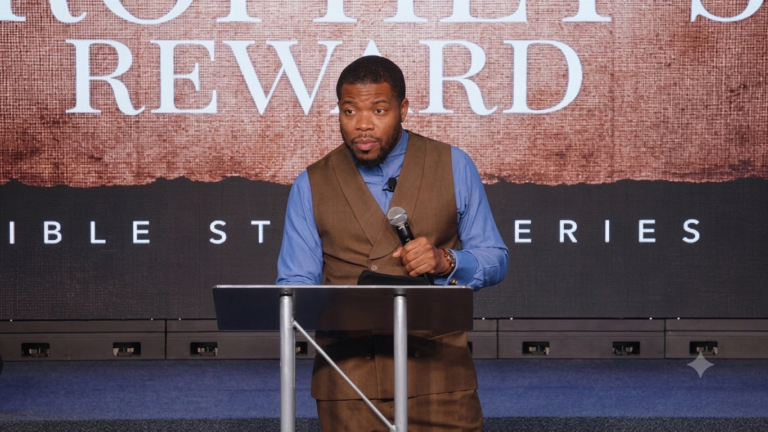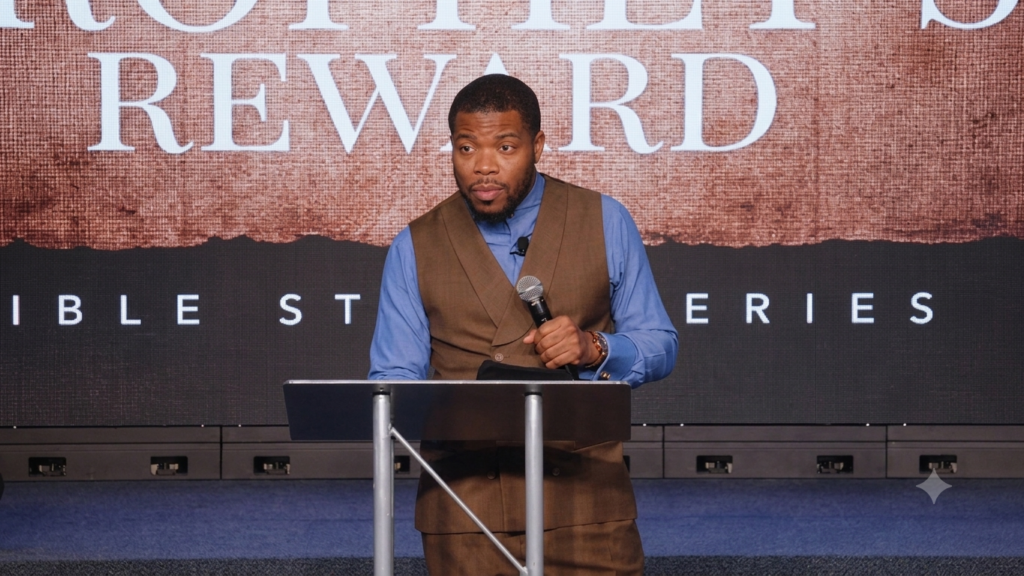
There’s a moment in this sermon where Prophet Brian Carn tells his congregation something simple: stop waiting for things to change. Start declaring that they already have.
On its own, that’s a message you’ll hear in churches every single Sunday, in one form or another.
But here’s what makes this particular sermon worth breaking down: the man delivering it is, right now, fighting his own very real, very public legal battle — one that could put him behind bars within weeks.
So when he stands in front of his congregation and says legal fights are actually spiritual attacks that require you to speak victory instead of waiting for it, you have to ask the obvious question. Is he teaching a timeless principle of faith? Or is he building the theological framework to explain his own situation to the people who follow him?
Below, we go through what he actually said, point by point — and then look at the context nobody in that room needed reminding of.
The Background
Brian Carn Jr. leads Kingdom City Church, with congregations in Charlotte, North Carolina, and in Georgia. He’s built a national following over the past decade as a self-described prophet, known for prophecy videos, healing services, and a large online audience across Facebook, Instagram, and TikTok.
He’s also, as of this year, a convicted federal offender. Carn pleaded guilty to a scheme to obstruct IRS collection efforts after failing to pay more than $600,000 in taxes he’d already admitted he owed. He was sentenced to nine months in federal prison and ordered to self-surrender — a deadline that’s been pushed back slightly, reportedly due to his father’s declining health.
That’s the backdrop. Now here’s the sermon.
“At Ease” Is the Enemy
The sermon opens with a warning against what he calls being “at ease.” His argument, paraphrased: believers get too comfortable, too passive, and they start treating their problems — legal trouble, personal conflict, financial pressure — as ordinary bad luck instead of what he insists they really are: spiritual attacks from an enemy that requires active resistance.
This is a foundational idea in a certain strand of American Pentecostal and charismatic preaching, often called spiritual warfare theology. The basic premise: the natural world and the spiritual world are directly connected, and setbacks in your physical life are frequently the visible symptom of an invisible battle. The response isn’t just patience — it’s aggression. Prayer as combat, not comfort.
It’s a framework that resonates with a lot of people, especially people going through something they can’t otherwise explain or control. And it’s worth noticing — without editorializing too hard — that “my problems are actually attacks from an external spiritual enemy” is also a very convenient lens for anyone going through a legal ordeal they’d rather their community interpret as persecution than consequence.
We’re not saying that’s what’s happening here. We’re saying it’s worth keeping in mind as we go through the rest of this.
“Having What You Say”
Next, Carn moves into a teaching that’s central to his ministry and to prosperity-adjacent preaching more broadly: the idea that your words carry creative power. He frames it as “having what you say” — meaning, according to his teaching, that believers shouldn’t wait passively for their circumstances to change. They should declare the outcome they want as if it’s already settled, and trust that the declaration itself sets it in motion.
He illustrates it with a story about someone who was denied something — the sermon frames it as an official approval or request — and after declaring out loud that it was already done, it reportedly came through unexpectedly.
This concept has a name in charismatic theology: positive confession, sometimes linked to Word of Faith teaching, a movement associated with preachers like Kenneth Hagin and Kenneth Copeland going back decades. It’s controversial even within Christian circles — critics argue it can shade into treating faith as a kind of verbal magic formula, while defenders point to biblical passages about the power of the tongue and the importance of speaking faith rather than fear.
Whatever side of that debate you land on, it’s not hard to see why this particular teaching would resonate with a congregation right now, watching their pastor publicly declare he’s not going to prison despite a federal judge’s order to self-surrender in weeks. Whether that’s rooted in genuine theological conviction or something else is, again, something we’ll let you decide for yourself.
Enforcing a Victory Already Won
From there, the sermon shifts into what’s arguably its most theologically dense section. Carn teaches that under what he calls the “New Covenant” — the Christian idea that Jesus’s death and resurrection fundamentally changed humanity’s relationship with God — believers aren’t fighting to win a battle against spiritual forces. They’re enforcing a victory that, in his framing, has already legally and spiritually been secured.
This lines up with a real strand of Christian theology around Christ’s finished work — the idea, rooted in passages like Colossians 2:15, that spiritual authority over “principalities and powers” was established at the cross, and believers today are meant to operate from that position of authority rather than fighting from a position of uncertainty.
The language he uses — “enforcing” victory rather than “achieving” it — is common in what’s often called dominion or kingdom-authority theology, which teaches that believers hold delegated authority to speak change into existence, in the same way a police officer enforces an existing law rather than writing a new one.
Heaven as a Present Reality
Then comes what’s probably the most theologically distinctive part of the sermon: his teaching on heaven.
Most mainstream Christian teaching treats heaven primarily as a future destination — where believers go after death, or where God’s kingdom is fully realized at the end of time. Carn pushes back against that framing. His argument, as he lays it out, is that because God created heaven, and because believers are described in scripture as being “in Christ,” heaven functions less like a distant place and more like a present reality that exists alongside — or within — the here and now.
This isn’t an entirely fringe idea. It echoes what theologians sometimes call realized eschatology — the belief that the Kingdom of God isn’t purely a future event but is, at least partially, already present and accessible. You’ll find versions of this idea across a range of Christian traditions, though Carn’s specific framing — heaven as something you access moment to moment through declaration and prayer — leans further into charismatic and prophetic tradition than into more traditional systematic theology.
He connects this directly to prayer, describing it as something like an “umbilical cord” between heaven and earth — the mechanism that, in his teaching, lets a believer pull heaven’s reality into their present circumstances.
It’s a vivid metaphor, and it’s clearly meant to be memorable. Whether you find it theologically sound or overreaching probably depends heavily on which Christian tradition you were raised in, if any.
So What’s Really Going On Here?
Every theme in this sermon — spiritual warfare against “legal or personal battles,” declaring victory instead of waiting for it, enforcing an outcome that’s already secured, treating heaven’s authority as available right now, not someday — lines up almost perfectly with a man facing a very real, very public countdown to federal prison.
That doesn’t necessarily mean the sermon is insincere. Plenty of religious leaders have drawn on their faith precisely because they’re going through something hard — that’s arguably what faith is for. And to be fair, this general theological framework — spiritual warfare, positive confession, kingdom authority — didn’t originate with Carn and isn’t unique to his situation. He’s working within a well-established tradition of American charismatic preaching that predates his legal troubles entirely.
But it’s also true that framing an IRS conviction and a prison sentence as a “spiritual attack” to be spoken away, rather than a legal consequence to be served, is a choice — one that shapes how an entire congregation interprets what’s happening to their leader. Whatever you believe about the theology itself, that’s worth sitting with.
Two Readings, One Sermon
At the end of the day, this sermon works on two levels. On one, it’s a fairly standard piece of charismatic teaching about spiritual authority, the power of declared faith, and an unconventional view of heaven — the kind of message that’s been preached in Pentecostal pulpits for decades.
On the other, delivered by this particular preacher, at this particular moment, it’s hard not to hear it as something more personal — a man building the theological case, in real time, for why his congregation shouldn’t interpret what’s coming next as defeat.
We’re not here to tell you which read is correct. We’re here to lay out exactly what was said, and exactly what’s happening around it, so you can make that call for yourself.
What do you think — is this spiritual language a genuine expression of faith under pressure, or a framework for avoiding accountability? Share your take in the comments below.
About the Author