Tyler Perry is taking his audience to church — literally.
The filmmaker announced this week that his new holiday film, The Gospel of Christmas, will be available for streaming on November 11, and he did it the way only Tyler Perry can: with a joyful invitation to the people who have followed him from the family reunion to the college road trip to the prison yard.
“I have taken y’all to a family reunion, on a college road trip, to prison — now come on go with me to church!!!” Perry wrote on X, according to wild941.com.
Perry wrote and directed the film, and the announcement alone has set the gospel community buzzing — because this is not just another holiday movie. The cast reads like a roll call of gospel royalty, the music comes from one of the genre’s most decorated producers, and at its center is a story about a struggling pastor, a troubled neighborhood, and the kind of faith that has to be found again before it can save anyone else.
The Story: A Pastor Barely Getting By
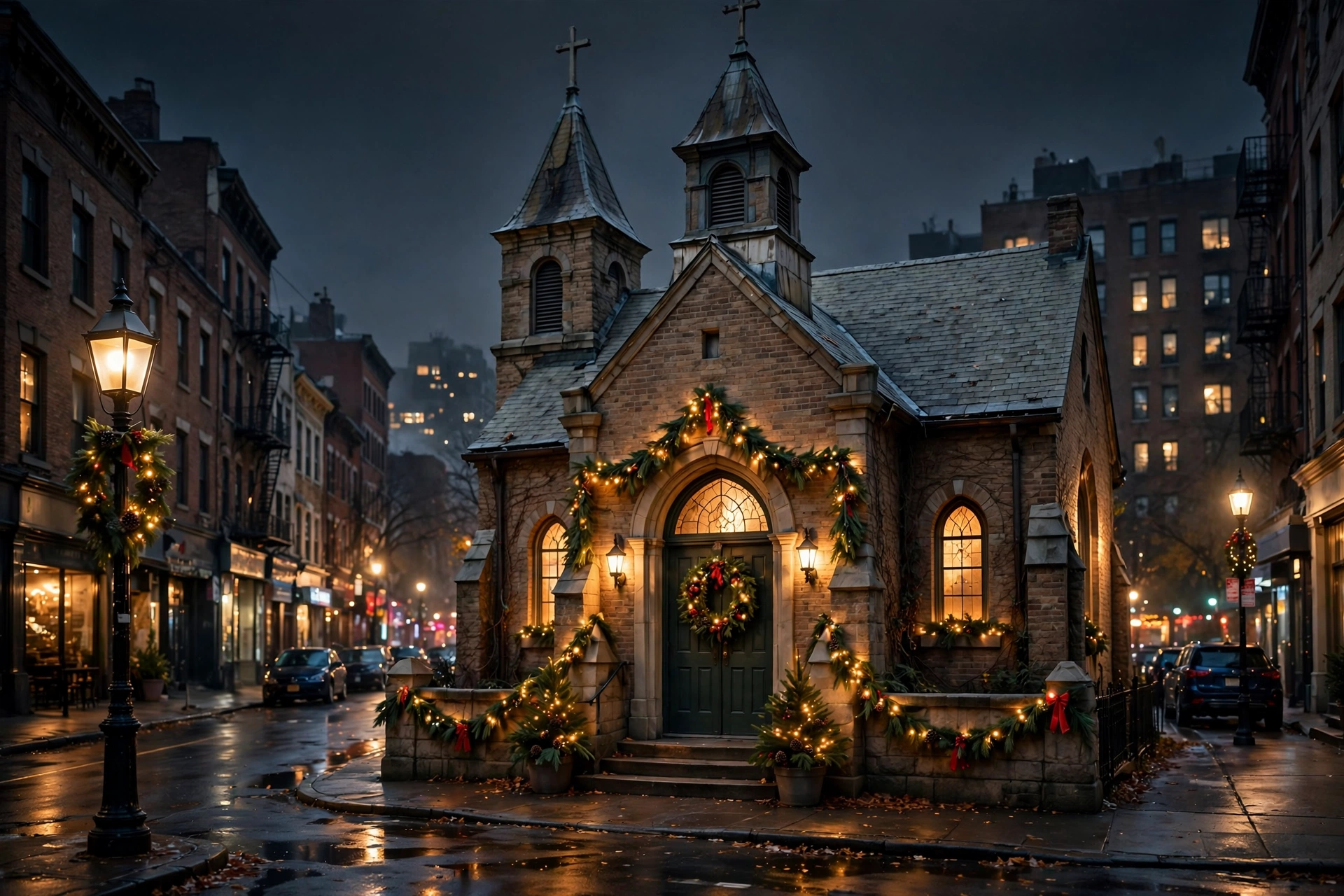
At the heart of The Gospel of Christmas is Isaac, played by Tank (real name Durrell Babbs) — a pastor who is barely getting by and suddenly inherits his family’s church in a troubled New York neighborhood.
Isaac’s journey is not a simple one. He wrestles with doubt and temptation, and faces what the film describes as a sinister enemy working against him. To save his church, his family, and his community, he must find his faith again and lean on the power of prayer.
It is familiar Perry territory in the best sense: an ordinary man under extraordinary pressure, a community hanging in the balance, and faith not as decoration but as the engine of the story. But the setting — a struggling urban church fighting for its life in a neighborhood that has seen better days — gives the premise a weight that will feel real to anyone who has ever sat in a pew and wondered how the lights stay on.
Tank, who has worked with Perry since 2006, said the script mirrored his own church upbringing. That personal connection shows in the casting: this is not an actor playing dress-up in a pulpit. Tank told Essence that Perry didn’t realize he was writing exactly who Tank is, versus just writing a story — the kind of alignment between performer and material that tends to show up on screen.
Playing Isaac’s wife Rebecca is Fantasia Barrino, who has called Perry a mentor since early in her career. Fantasia’s own journey — from winning season three of American Idol to playing Celie in the 2023 musical version of The Color Purple to taking home the 2024 NAACP Image Award for outstanding actress in a motion picture — has been one of the most watched transformations in entertainment. Her presence gives the film both star power and soul credibility: when Fantasia sings about faith on screen, nobody in the audience will doubt she means it.
The Cast: Gospel Royalty, All in One Place

What has the gospel world talking, though, is the supporting cast — a lineup so stacked with legends that it reads like a Stellar Awards seating chart.
Yolanda Adams. Fred Hammond. Smokie Norful. Jekalyn Carr. The Clark Sisters. Vanessa Bell Armstrong. Ann Nesby. Le’Andria Johnson. Hezekiah Walker. CeCe Winans. Shirley Caesar.
Read that list again slowly. That is multiple generations of gospel music — from Shirley Caesar, the undisputed Queen of Gospel whose career spans more than six decades, to Jekalyn Carr, representing the genre’s new school — all appearing in a single Tyler Perry film. The Clark Sisters bring the pioneering family-harmony sound that shaped modern gospel. Hezekiah Walker brings the choir-master energy that has filled arenas. CeCe Winans brings the crossover credibility of one of gospel’s most decorated voices. Vanessa Bell Armstrong and Ann Nesby bring the deep traditional roots. Fred Hammond and Smokie Norful bring the male vocal powerhouses. Yolanda Adams brings the voice that carried gospel into the mainstream.
Lineups like this do not happen by accident. Perry has spent his career putting Black church culture at the center of mainstream entertainment rather than at its margins, and assembling this cast is a statement: gospel music is not background flavor for a Christmas movie. It is the main event.
For the artists themselves, the film is also a homecoming of sorts. Many of these singers built their careers in church sanctuaries before they ever touched a stage, and a Tyler Perry production — with its unapologetic embrace of faith, family, and testimony — is one of the few places in Hollywood where that heritage is treated as an asset rather than something to be sanded down.
The Music: Kirk Franklin at the Helm

If the cast is gospel royalty, the music is in the hands of gospel’s most successful architect. Kirk Franklin produced the film’s music, and the soundtrack is described as a mix of gospel, rap, and holiday songs.
That blend is pure Franklin. For three decades, he has been the genre’s great bridge-builder — the producer who took gospel choirs into hip-hop territory, who made Sunday morning sound like Saturday night without losing the message, who proved that sacred music could live on mainstream charts without apologizing for being sacred. A Christmas soundtrack that moves between gospel, rap, and holiday standards is exactly the kind of project Franklin was built for.
The combination matters because Christmas films live or die on their music. The songs are what audiences hum on the way home, what gets added to holiday playlists, what turns a November streaming release into a December tradition. With Franklin producing and that cast singing, The Gospel of Christmas arrives with the musical firepower to outlast its opening weekend.
It is also worth remembering what Franklin represents to the generation that grew up on his records. For millions of church kids, his music was the first proof that faith could be loud, joyful, and culturally current all at once. Putting him in charge of a Christmas soundtrack is Perry trusting the film’s emotional core to someone who has never missed on that front.
Perry’s Faith Storytelling Lane

There is a larger story here about Tyler Perry himself and the lane he has carved in American entertainment.
Perry’s announcement — “I have taken y’all to a family reunion, on a college road trip, to prison — now come on go with me to church” — is more than marketing. It is a map of his career. From the Madea films to his dramas to his television empire, Perry has consistently centered Black family life, Black struggle, and Black faith in stories that Hollywood historically ignored. His Atlanta studio complex, built on a former Confederate Army base, stands as one of the most potent symbols in entertainment of an industry being remade.
Earlier this year, Perry said in a Today show interview that he was slowing down and getting ready for life in Puerto Rico. If The Gospel of Christmas represents the next phase — fewer projects, but projects with deeper personal meaning — then a faith-centered Christmas film surrounded by gospel legends is a fitting way to define it. This is not Perry chasing a trend. This is Perry going home.
The timing is also worth noting. Shortly before this film, Perry released Doing Life and Why Did I Get Married Again? — evidence that even in a supposed slowdown, his output remains formidable. But The Gospel of Christmas feels different in intent: less about volume, more about legacy.
What It Means for the Gospel Community
For the gospel community, the film’s arrival is significant beyond entertainment. Gospel music has always lived in two worlds — the sanctuary and the industry — and the distance between those worlds has often been a source of tension. A major streaming release that treats gospel artists as stars rather than set dressing, that builds its story around a pastor and a praying church, that puts Kirk Franklin’s sound at the center of a holiday soundtrack: that is representation with substance.
It also arrives at a moment when faith-based entertainment is proving its commercial power. Audiences have shown, repeatedly, that they will turn out for stories that take belief seriously. Perry, who understood that long before the industry caught up, is now in a position to deliver that audience something made with genuine love for the culture it depicts.
And for the artists in the cast — many of whom have spent careers being asked to crossover, to soften, to translate themselves for audiences unfamiliar with the church — there is something quietly powerful about a project where no translation is needed. The audience Perry is inviting to church already knows every word.
The Countdown to November 11
The Gospel of Christmas premieres November 11 on streaming, with Perry sharing producing duties alongside Angi Bones and Tony L. Strickland. Between now and then, expect the gospel world to do what it does best: talk, testify, and turn up.
For Tyler Perry, the invitation stands as he wrote it: come on, go with him to church. Given the cast he has assembled, the music Franklin has produced, and the story at its center, it is an invitation millions are likely to accept.
About the Author