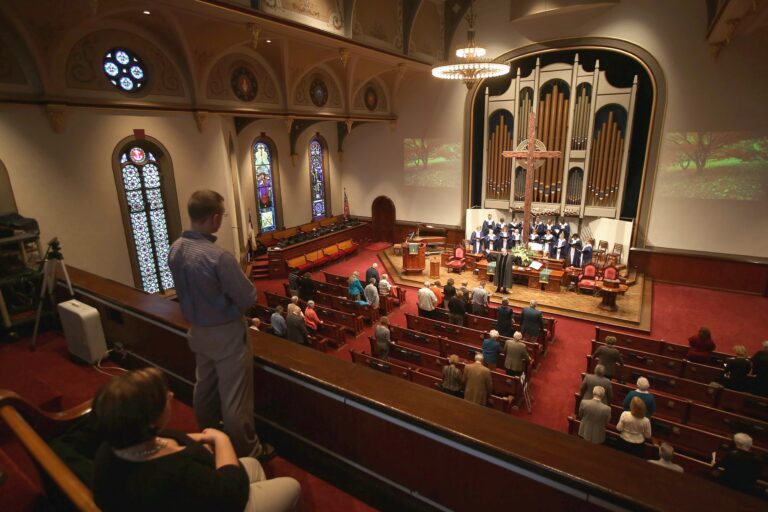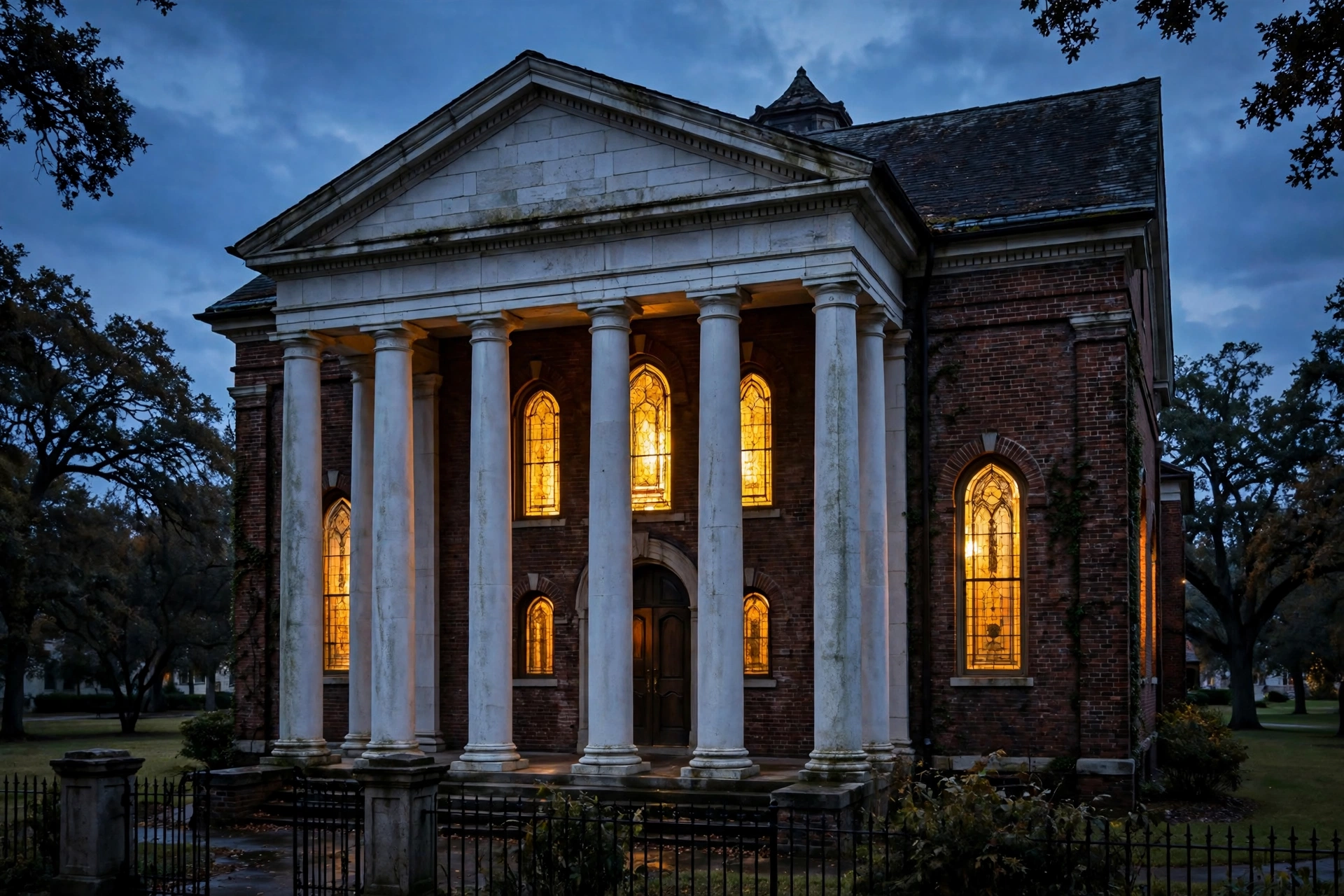
CLEVELAND, Ohio — The congregation at Shiloh Baptist Church is small, and the building at 5500 Scovill Avenue is showing its age. For years, the members of Cleveland’s oldest African American Baptist congregation have watched the foundation beneath the sanctuary’s great columns buckle and the stained-glass windows warp, wondering how much longer their historic home could hold together.
Now they have an answer — and $750,000 to back it up.
Shiloh Baptist Church has received a $750,000 grant from the National Park Service’s African American Civil Rights Grant Program to preserve its landmark building, according to the Christian Post. The Rev. Lisa Goods, the church’s first female senior pastor, greeted the news with the joy of someone who has prayed a long time for it.
“This grant was just a gift from God in our plan not only to sustain our congregation, but to serve the city of Cleveland,” Goods told the Christian Post.
For a church that has stood as a sanctuary through slavery’s aftermath, the Great Migration, the civil rights movement, and the upheaval of the 1960s — a church whose pulpit once carried the voice of the Rev. Martin Luther King Jr. — the grant is more than a repair fund. It is, in Goods’s telling, a sign that the building’s best days of service may still lie ahead.
A Building Crying Out for Help
To understand what $750,000 means to Shiloh, it helps to know what the congregation has been up against.
The current sanctuary, which the church moved into in 1926, was originally built in 1906 as the B’nai Jeshurun Jewish temple, according to the Cleveland Restoration Society. The structure is recognized as both a local and national historic landmark — a designation that honors its significance but does nothing to slow the wear of a century of Ohio winters.
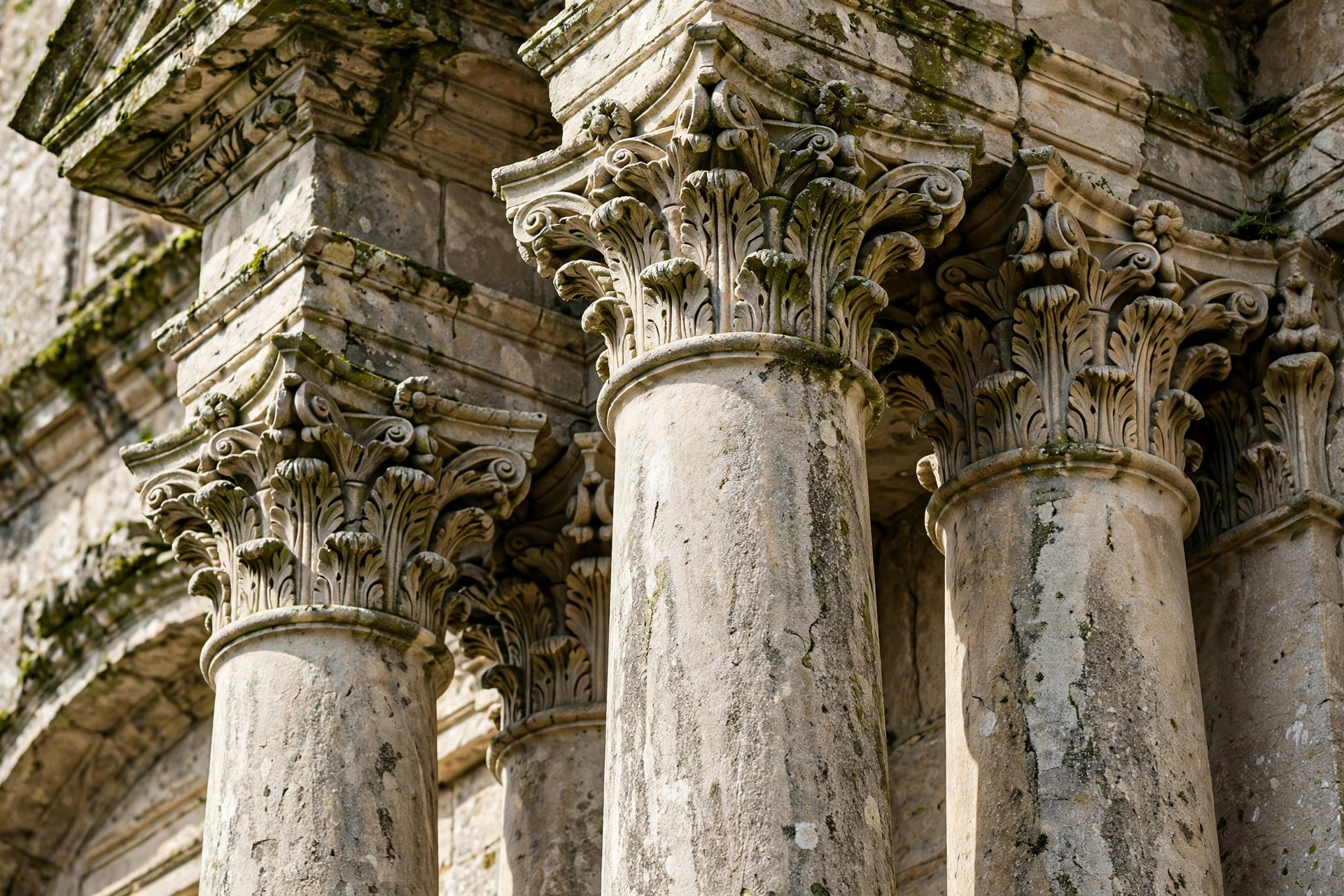
The damage is not cosmetic. WKYC reported that the foundation beneath the building’s large columns is buckling, and some of the stained-glass windows are warping. These are the kinds of structural problems that keep trustees awake at night and drain the budgets of congregations far larger than Shiloh’s.
Goods has been candid about the toll. She told News 5 Cleveland that maintaining the aging building has been a “long struggle” for the small congregation — the familiar story of a historic Black church whose membership has thinned even as its maintenance bills have grown. Across the country, congregations like Shiloh face the same math: landmark buildings, landmark responsibilities, and offering plates that were never designed to fund six-figure structural repairs.
That is what makes a federal preservation grant so transformative. It does not ask the congregation to choose between fixing the foundation and funding ministry. It lets them do both.
A Sanctuary Since 1849

Shiloh Baptist Church was founded in 1849, making it Cleveland’s oldest African American Baptist congregation. Its history reads like a condensed history of Black Cleveland itself.
During the Great Migration, when hundreds of thousands of Black Southerners poured into Northern industrial cities, Shiloh served as a place of asylum — a landing point for families arriving in an unfamiliar city with little more than hope and a suitcase. The church was where newcomers found not just worship but community: help finding work, a place to stay, a network of people who understood the journey because they had made it themselves.
The congregation carried that role forward through the civil rights era. When Cleveland’s Hough neighborhood erupted in riots in the summer of 1966 — five days of unrest that left parts of the city’s east side in ashes — Shiloh’s members did not retreat behind the sanctuary doors. The congregation helped rebuild homes destroyed by fire, putting the church’s longstanding ethic of service into brick-and-mortar practice at the very moment the neighborhood needed it most.
It is the kind of history that cannot be replicated and should not be lost. A building that sheltered migrants, anchored a movement, and rebuilt a neighborhood is not just a church — it is an archive in stone and stained glass.
The Night Dr. King Came to Shiloh
Among all the chapters in Shiloh’s long story, one evening in 1967 stands apart.
That year, the Rev. Martin Luther King Jr. preached from Shiloh’s pulpit. According to Goods, speaking to the Christian Post, King used the occasion to speak out against the Vietnam War and to encourage the congregation to support Operation Breadbasket — the Southern Christian Leadership Conference’s economic justice campaign — and to protest the Sealtest dairy company’s treatment of African Americans.
It was vintage King: weaving the local and the national, the economic and the moral, into a single call to conscience. For the members of Shiloh who were there, it was the kind of night a congregation remembers for generations — the night the most famous preacher in America stood in their pulpit and asked them to stand for something bigger than themselves.
Nearly six decades later, the memory still shapes the church’s identity. When Goods talks about serving the city of Cleveland, she is talking about a lineage that runs through that 1967 sermon and back through more than a century of witness. The grant, in that light, is not just about preserving a building. It is about preserving the room where history happened — and making sure the room is still standing the next time history needs a place to gather.
A Grant Years in the Making
The $750,000 award comes from the National Park Service’s African American Civil Rights Grant Program, a federal initiative that funds the preservation of sites associated with the Black freedom struggle. Competition for the grants is fierce, and the applications are demanding — which is why Shiloh did not go it alone.
The Cleveland Restoration Society, the city’s leading historic preservation organization, helped the church prepare its grant application. The partnership was a natural one: the Society had already recognized the building’s significance as a local and national landmark, and it brought the technical expertise — documenting the structure, detailing the needed repairs, making the historical case — that turns a worthy cause into a winning application.
The collaboration also says something about how preservation works at its best. Shiloh brought 176 years of history and a living congregation. The Restoration Society brought the know-how to navigate a federal grant process. Together, they made the case that this building — buckling foundation, warping windows and all — is worth saving not as a museum piece but as a working church.
A First for the Pulpit
The Rev. Lisa Goods leads Shiloh as its first female senior pastor — a milestone in a congregation that has been making history since before the Civil War.
Her leadership has been defined, in many ways, by the same tension the grant resolves: honoring a monumental past while keeping a small congregation moving forward. She has spoken openly about the struggle to maintain the building, and her response to the grant — calling it “a gift from God” — carries the relief of a pastor who has watched her people carry a burden that was never really theirs to carry alone.
There is a quiet symbolism in the fact that it is Shiloh’s first woman pastor who secured the means to preserve the church’s future. The congregation that once gave asylum to migrants, rebuilt a riot-torn neighborhood, and hosted Dr. King is now led by someone breaking her own ground — and using the occasion to talk not about survival but about service.
“This grant was just a gift from God in our plan not only to sustain our congregation, but to serve the city of Cleveland,” she told the Christian Post. The emphasis matters. The money is not an end in itself. It is a means — to keep the doors open, the columns standing, and the church’s long tradition of showing up for Cleveland intact.
What Comes Next
The practical work begins now. The grant funds will go toward stabilizing the foundation beneath the sanctuary’s columns and addressing the warping stained-glass windows — the structural repairs that WKYC documented and that have worried the congregation for years. Beyond the bricks and mortar, the award gives Shiloh something harder to quantify: breathing room.
For small historic congregations, deferred maintenance is a slow crisis. Every year a repair is put off, the damage compounds and the cost grows. A $750,000 infusion does not just fix what is broken — it breaks the cycle, giving the church a sound building from which to plan its next chapter rather than a crumbling one to merely defend.
And Shiloh has plans. Goods has framed the grant explicitly around service to Cleveland — sustaining the congregation so it can keep serving the city. In a neighborhood that has seen disinvestment and struggle, a restored historic church is more than a pretty building. It is a statement that some institutions endure, that some promises are kept, and that the work of generations is worth continuing.
The story of Shiloh Baptist Church is, in the end, the story of Black Cleveland in miniature: founded before emancipation’s promise was fully realized, a haven during the Great Migration, a staging ground during the movement, a rebuilder after the fires, a pulpit for a prophet. That the federal government has now invested three-quarters of a million dollars in keeping that story’s home standing is a recognition long overdue.
Goods called it “a gift from God.” For the small congregation that refused to let a landmark crumble, it is also something else: proof that faithfulness, sustained over 176 years, has a way of being answered.
About the Author