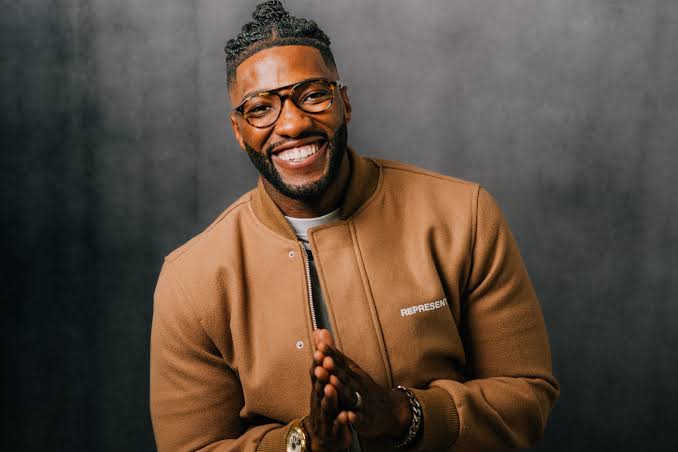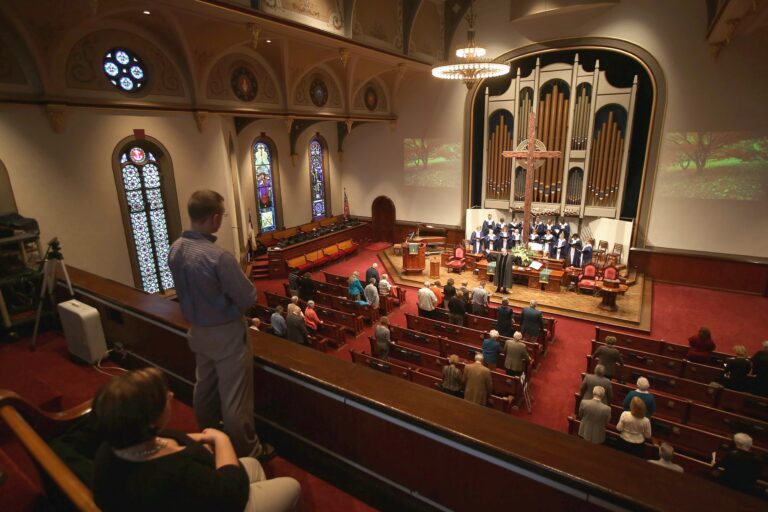
STONECREST, Georgia — One hundred days after Nolan Wells was last seen alive, Pastor Jamal Bryant and the congregation of New Birth Missionary Baptist Church released 1,000 white balloons into the Georgia sky — a memorial meant to keep an unsolved case in the national conversation. Within hours, the tribute had drawn more than 5,600 comments, and the reaction was sharply divided.
Supporters called the gesture a powerful refusal to let the case go cold. Critics called it an environmental disaster. The split captures something larger about this case: even the ways people demand answers have become a battleground.
The Tribute
On Sunday, October 11, Bryant posted video of the balloon release on Instagram. A large crowd gathered as 1,000 white balloons floated upward. Attendees could be heard chanting Nolan’s name as the balloons drifted above the gathering.
Bryant’s caption made the purpose explicit: the release marked 100 days since Wells’ death, honored his memory, and renewed the church’s commitment to seeking justice and closure. “A shut door doesn’t mean a shut case!” he wrote, urging supporters to keep saying Nolan’s name.
The tribute was the latest in a series of actions Bryant has taken around the case. He led New Birth in prayer for the Wells family in July, spoke at a vigil in Biloxi marking what would have been the young man’s 19th birthday in August, and gave the keynote address at a national prayer rally demanding answers. He has also interviewed the parents, amplifying their calls for a federal investigation.
For Bryant, the balloons were continuity — another beat in a pastoral advocacy campaign that has made him one of the most prominent clergy voices attached to the case. New Birth, the Stonecrest megachurch he has led since 2018, has become a regular staging ground for that advocacy, and Bryant’s national profile means his actions travel well beyond the sanctuary walls.
That reach is precisely what makes the method matter as much as the message. A private congregation’s memorial, posted to Instagram, reached millions within a day — and the environmental criticism it drew is now part of the story itself.
The Backlash

The criticism arrived almost immediately, and it was not about the case. It was about the balloons.
Commenters argued that releasing 1,000 balloons into the atmosphere creates litter that endangers wildlife — seabirds that mistake the debris for food, ocean animals entangled in the strings, farm animals that ingest the remnants. One widely shared comment praised the intent but called the environmental fallout unacceptable. Another suggested alternatives: butterflies, candlelight vigils, anything but balloons.
The environmental case against balloon releases is not new. A 2019 study published in Scientific Reports, cited in coverage of the tribute, found that seabirds which had consumed marine debris were 32 times more likely to die from eating balloons than from hard plastic. Balloon-release bans have been adopted in multiple states and municipalities for precisely this reason, and memorial culture has been slowly moving away from the practice — toward lanterns, dove releases, butterfly releases, and other gestures that leave nothing behind.
That shift is worth noting because Bryant’s tribute landed in the middle of it. A decade ago, a balloon release would likely have been read as pure memorial. In 2026, a significant portion of the audience reads it as a choice — and judges the choice against what is now widely known about where balloons end up.
But the defense of the tribute was equally passionate. Supporters thanked Bryant and the congregation for refusing to let the case fade, writing that they would never stop saying Nolan’s name. Some called the moment profound and moving. The divide, as one roundup put it, was not between those who cared and those who didn’t — it was between support for the memorial’s message and criticism of how it was carried out.
As of this writing, Bryant has not publicly responded to the criticism.
The Case Behind the Tribute
To understand why 1,000 balloons went up on October 11, it helps to retrace the 100 days that preceded them.
Nolan Wells, 19, was last seen alive on July 4 on Horn Island, off the Mississippi coast. His body was recovered on July 6 near the island. Two autopsy reports — one official and one independent commissioned through attorney Ben Crump — were unable to determine a cause or manner of death. Crump has said the state’s autopsy found no signs of water in the throat or lungs, a finding that raised more questions than it answered.
A grand jury reviewed the case and found there was not enough evidence to pursue criminal charges against anyone. It is important to be precise here: no one was charged, so no one was acquitted. The grand jury simply declined to move forward.
The family has not accepted that outcome. Nolan’s parents, Christine and Elmore Wonsley, have continued pushing for a federal investigation into what happened on and around July 4. Christine Wonsley posted on social media as recently as October 7 and October 10, demanding answers about her son’s death.
The questions that keep the family — and Bryant — pushing are the ones the official record has never resolved. What happened during the boat trip on July 4? Why did the autopsies come back undetermined? And how does a 19-year-old end up dead on a holiday weekend with no official explanation?
The case has drawn national attention in part because of figures like Bryant and Crump, and in part because of the unanswered questions themselves: a young man, a holiday weekend on the water, a body recovered days later, and an official record that cannot say how he died.
Bryant’s Role — and the Line He Walks
Bryant’s involvement in the Wells case has been sustained and visible, and it has also been controversial in its own right. He has described the circumstances of Wells’ death in stark terms and argued that the case deserves the urgency the family says it has not received.
That advocacy has made him a hero to the family’s supporters and a lightning rod to others. Commentators outside the church world have questioned whether high-profile figures should frame the case’s meaning before the evidence establishes what happened. The balloon backlash is a smaller version of the same dynamic: a pastor’s symbolic act, amplified to millions, judged by an audience far beyond his congregation.
This is the reality of pastoral advocacy in the social media age. A gesture intended for a grieving family and a local congregation becomes, within hours, a national debate about environmental ethics. The message and the method get separated, and the method gets tried in the comments.
Bryant’s defenders would say that is the price of keeping a case alive when the official system has moved on. His critics would say a pastor with his platform should know better than to choose a tribute that harms the creation he preaches about stewarding.
Both things can be true at once: the intent can be righteous and the execution can be flawed. The congregation that released those balloons did not do it for the cameras — but the cameras were always going to be there.
What Remains Unanswered
Strip away the balloon debate and the case itself is unchanged: 100 days after Nolan Wells was last seen alive, no one has been charged, no cause of death has been determined, and his parents are still asking what happened to their son.
Bryant’s caption on Sunday contained a line that applies to the whole controversy, not just the tribute: “A shut door doesn’t mean a shut case.” The grand jury’s decision closed one door. The family’s push for federal attention is an attempt to open another.
Whether the balloons helped or hurt that cause is now its own debate. But the name they were meant to keep in the air — Nolan Wells — is still being said, still being chanted, still being posted. For the family waiting on answers, that may be the only metric that matters.
About the Author