Two of Georgia’s most recognizable Black pastors are standing on opposite sides of the state’s race for governor, and an old fight over pandemic-era church shutdowns has pushed their split into the open.
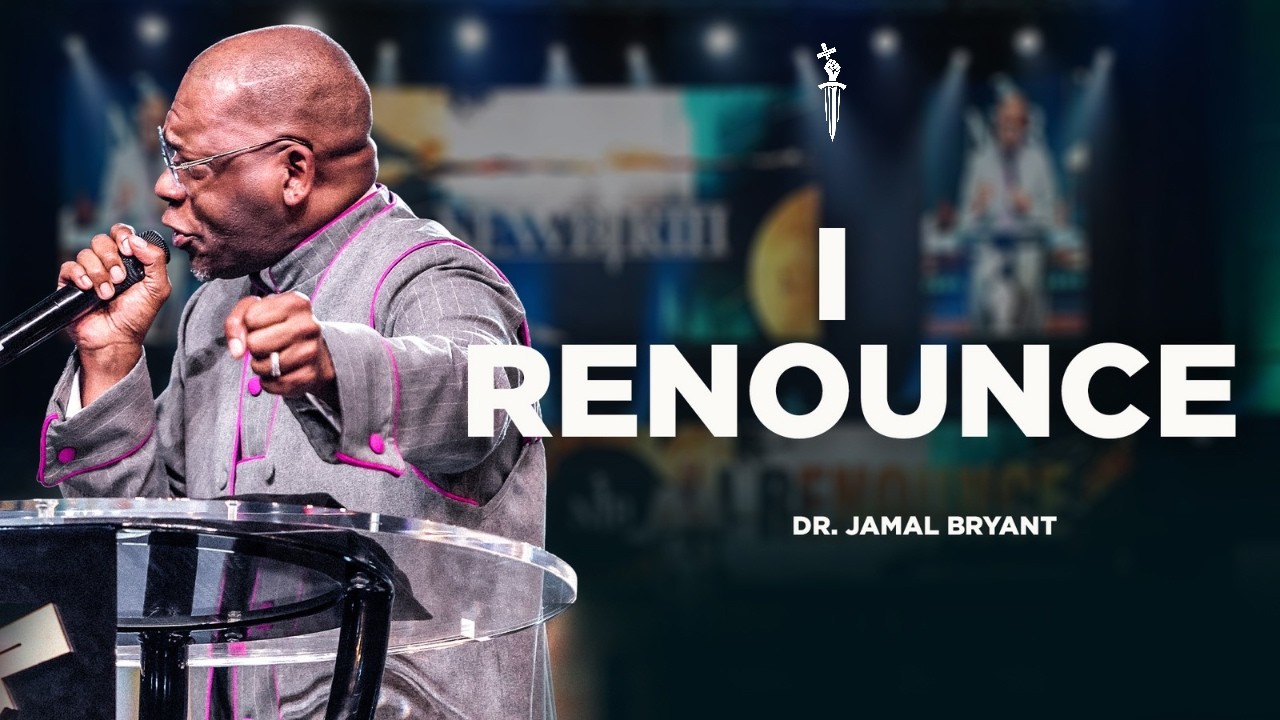
Bishop Luther McKinstry, who has pastored the Worship Center of Atlanta for 28 years, is supporting Republican nominee Rick Jackson. Pastor Jamal Bryant of New Birth Missionary Baptist Church is backing Democratic nominee Keisha Lance Bottoms, the former mayor of Atlanta. The contrast surfaced this week in a widely shared church-news segment that placed the two preachers side by side and asked a question now echoing across Georgia pulpits: should pastors publicly endorse political candidates at all?
Early voting in Georgia is already underway, and the general election is set for November 3. With Governor Brian Kemp term-limited, the open seat has drawn one of the most expensive and closely watched contests in the country — and, increasingly, one of its most personal fights is being waged from the pulpit.
A pandemic Sunday McKinstry says he will never forget
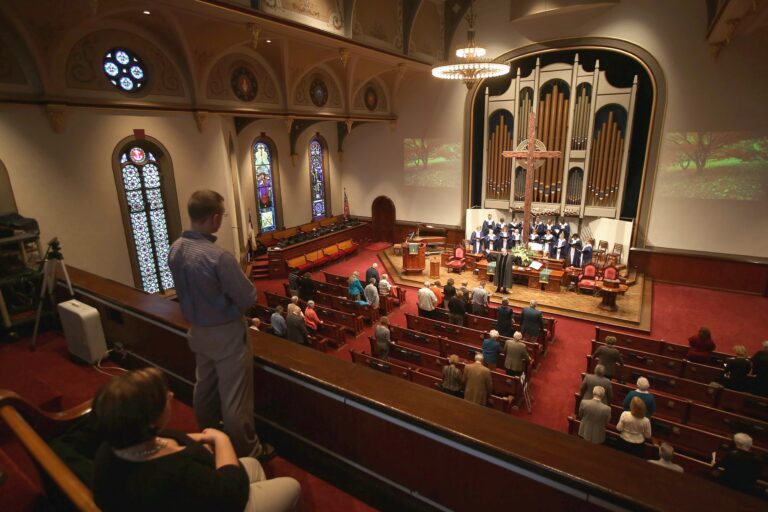
At the center of McKinstry’s case against Bottoms is a Sunday morning he has described in detail: during the COVID-19 pandemic, when Bottoms was mayor of Atlanta, officers arrived at his church while a service was underway.
“Officers came to my service to shut my service down,” McKinstry recalled. “They was in my office, and they came to me and said, ‘You know, you’re not supposed to have service.’”
He says he answered by reading the officers his First Amendment rights and pointing to guidance from Governor Kemp, who had told pastors the state would not dictate how they fed their flocks, as long as gatherings followed spacing guidance. An officer inspected the sanctuary, reported back that the church was in compliance — and then, according to McKinstry, the captain made a request of his own.
“He says, ‘Do me a favor. Would you please pray for me?’” McKinstry said. “‘Because I do not want to do this, because I do not want to come against God and I don’t want to come against the people of God.’ He says, ‘But the mayor is making us do this right now.’”
For McKinstry, the episode is not ancient history. It is the foundation of his warning about Bottoms now.
“If she came against the church then, she has no problem with coming against the church again,” he said. “This is a kingdom thing. It’s not about color. It’s not about race. What I need for you to do, I need you to get out and vote. Make sure that you vote and make your voice heard.”
McKinstry has also appeared in a political advertisement supporting Jackson’s campaign, taking his endorsement beyond the pulpit and onto television screens across the state.

Bryant is mobilizing for Bottoms
Bryant’s support for Bottoms is just as public, though it has taken a different form. The New Birth pastor joined a “Men for Keisha” call to action alongside Senator Raphael Warnock, Atlanta Mayor Andre Dickens, Baltimore Mayor Brandon Scott and actor Tyrese Gibson, urging Black men in Georgia to register, organize and turn out.
On that call, Bryant pointed to numbers he argues should haunt the church into action: Black men in Georgia lead the state in unemployment at 6.9 percent, and roughly 400,000 Black Georgians sat out the last gubernatorial election — a race Governor Kemp won by just 55,000 votes.
It is familiar territory for Bryant, who has built a national profile on pulpit-driven activism, from the Target boycott he led after the retailer rolled back its diversity commitments to sermons that routinely name policies and politicians directly. Where McKinstry sees a candidate who once moved against the church, Bryant sees a race that the church cannot afford to sit out.
The candidates they are fighting over in the Georgia governor race
Bottoms won the Democratic nomination outright in the May 19 primary with about 56 percent of the vote, defeating a crowded field. A former Atlanta mayor who later served in the Biden administration, she has been endorsed by both Joe Biden and Barack Obama, and recent campaign polling discussed by her team has shown her holding a narrow lead.
At campaign stops, she has gone directly at her opponent, branding the Republican nominee “Slick Rick” and telling supporters there “ain’t a single policy of Trump that he disagrees with” — running through his positions on abortion bans and federal funding cuts as she makes the case.

Jackson, the founder and CEO of Alpharetta-based Jackson Healthcare, is a first-time candidate who announced his run in February and powered it with more than $100 million of his own money — the largest self-funded primary effort in Georgia history. He beat Lt. Gov. Burt Jones in the June 16 Republican runoff, 52.6 percent to 47.4 percent, after Jones had secured President Trump’s endorsement; Trump and Kemp have since transferred their support to Jackson. His campaign leans heavily on his personal story — a childhood in Atlanta public housing and foster care, and a rise to billionaire status — and on his pledge, in his own words, to be Donald Trump’s favorite governor.
Polls have shown the general-election race to be extremely tight, easily swayed by voters who are still undecided — which is precisely why the voices of pastors, who speak every week to some of the state’s most reliable voters, carry unusual weight this cycle.

An old debate with new stakes
The Bryant–McKinstry split is, in one sense, the newest chapter of a very old argument in the Black church: whether the pulpit should stay above partisan politics or step directly into it. McKinstry’s position grows out of a church-freedom frame — a pastor who says the government once sent officers to his sanctuary door now sees candidate choice as a kingdom matter. Bryant’s grows out of a mobilization frame — a pastor who argues that faith that refuses to organize is faith that forfeits power its community cannot spare.
What makes this moment different is the calendar. Early voting began October 13, the registration deadline has passed, and Georgians are already casting ballots while the two pastors make their cases. Both men are, in effect, preaching to the same statewide congregation — and telling it to vote in opposite directions.
Neither campaign has commented publicly on the pastors’ contrasting roles, and the churches themselves have not issued statements framing the endorsements as official congregational positions. But with less than two weeks until Election Day on November 3, Georgia’s governor race is now also a referendum on a question the Black church has debated for generations: when the election is this close, is the pulpit a sanctuary from politics — or a platform for it?
About the Author