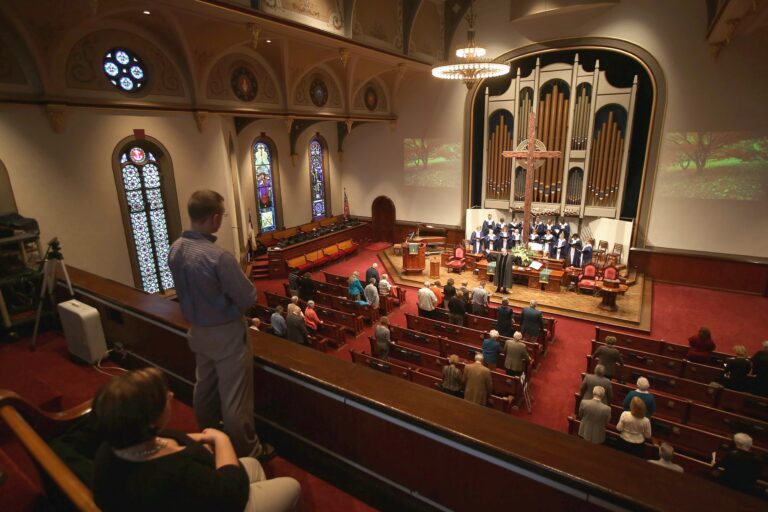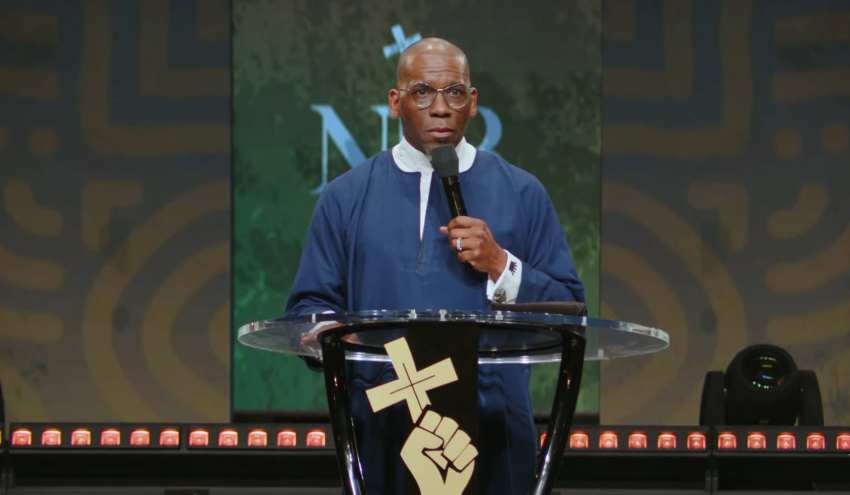
STONECREST, Georgia — Pastor Jamal Bryant has never been afraid of a fight from the pulpit, and on Sunday he picked one of the most sensitive arguments in the Black church: whether a Christian can wear Divine Nine letters and still be faithful to God.
In an Oct. 18 sermon titled “I Renounce” at New Birth Missionary Baptist Church, Bryant addressed the growing wave of believers who are publicly walking away from the nine historically Black fraternities and sororities known as the Divine Nine. His message was not that anyone should be forced to stay. It was that the conviction behind many of the departures, in his view, stops in a strange place.
“You have a right to do so in this nation and under the doctrine of free will,” Bryant told the congregation about those who have left. “In no means am I asking you to rejoin. Stay over there.”
Then he turned the sermon toward Washington.

‘Hazing Is Not Holy’
Bryant, who affirmed his own lifetime membership in Kappa Alpha Psi Fraternity during the sermon, was careful to separate the organizations from the abuses sometimes committed in their name. He condemned the physical, emotional and spiritual harm connected to hazing, acknowledged that people have died in hazing incidents, and said the church should be a place of safety for those who were hurt coming through the process.
“Hazing is not holy,” he said, adding that whatever dehumanizes people is what deserves to be renounced.
That distinction — renounce the abuse, not the institution — became the backbone of his argument. Bryant pointed to the service record of the Divine Nine organizations, which for more than a century have run scholarship programs, literacy efforts, mentoring and voter registration drives in Black communities. The Smithsonian’s National Museum of African American History and Culture documents those contributions to literacy, professional development, voter registration and community service.
“Tell me how you curse the people who are doing the work, but you don’t curse the system that makes their work necessary?” he asked.
The Question That Lit the Fire
The line that carried the sermon across social media was not about Greek life at all. It was about politics.
Bryant challenged former fraternity and sorority members who have posted emotional videos of themselves putting down their colors and throwing away their paraphernalia, asking why that same public conviction has not produced a word against the policies of President Donald Trump.
“I want to ask how you renounce your D9 affiliation, but you have not found enough Holy Ghost conviction or discernment to renounce not one Trump policy?” he said, accusing the silent of watching Trump demand allegiance while saying nothing, and calling them “tap-dancing negroes.”
The phrase landed hard. Supporters heard a pastor demanding consistency — if faith requires public stands, they should not be limited to safe targets. Critics heard a pastor belittling deeply personal decisions of conscience and dragging a spiritual question into partisan politics. Within days, the sermon had drawn coverage from entertainment and Black news outlets alike, and reaction videos from pastors and commentators were pulling in tens of thousands of views.

Why Travis Greene Is at the Center of This
Bryant did not build the moment by himself. The most prominent name attached to the renunciation wave is gospel singer and pastor Travis Greene, and understanding his story is essential to understanding why Bryant’s sermon hit such a nerve.
Greene, the senior pastor of Forward City Church in Columbia, South Carolina, and the voice behind songs like “Made a Way” and “Intentional,” publicly denounced his membership in Kappa Alpha Psi in October 2025 — a full year before Bryant’s sermon. Speaking at his church on Oct. 12, 2025, and in a social media post that followed, Greene explained that he had pledged the fraternity as a student at Georgia Southern University, where he rose to a leadership role in his chapter.
Over time, he said, he became convinced that elements of the fraternity experience — its poems, pledges and rituals — amounted to idolatry. In his sermon he said the involvement had led him into what Christianity Today described as “pride and perversion.” In his written post, as summarized by Religion News Service, he called the rituals “satanic” and “an idol.”
The detail that makes the current clash so striking is this: Bryant and Greene are brothers in the same fraternity. Both men pledged Kappa Alpha Psi. One kept his letters and defends them from the pulpit. The other surrendered his and preaches that faithfulness required it. The argument Bryant revived on Sunday is, at its core, an argument between two pastors who read the same Bible and the same fraternity history and reached opposite conclusions.
As of Thursday, Greene had not publicly responded to Bryant’s sermon, and no direct exchange between the two men has been reported. The “clash” so far is a clash of pulpits, not of statements aimed at each other.

A Wave Years in the Making
Greene was never alone. For several years, former members of Divine Nine organizations have posted testimony videos on TikTok, Instagram and YouTube announcing their departures — hundreds of them, as The Washington Post has reported. The reasons repeat from video to video: initiation oaths understood as spiritual covenants that compete with allegiance to Christ, ceremonial language adapted from Scripture, and symbols linked to ancient deities.
The wave has pulled in other well-known voices. Rapper Lecrae shared his own story of leaving a fraternity, but counseled viewers to treat the matter as one of conscience and Christian liberty rather than a test of salvation. Pastor Eric Mason offered a similar caution against demonizing believers who land on the other side. Influencer Tiphani Montgomery, by contrast, has been among the loudest voices arguing that the vows themselves are idolatrous and that members should get out.
The debate itself is far older than social media. A book titled “Should Christians Pledge Fraternities and Sororities?” was published back in 1990, and individual departures have made news for years — a former Delta Sigma Theta member formally denounced her membership in 2018, and a Howard University student publicly renounced the same sorority in May 2024, saying the initiation requirements clashed with her Christianity in ways her research had not prepared her for.

Why Many Christians Are Staying
On the other side stand members — including many pastors — who say the renunciation movement misreads what membership means. Defenders argue that an organization’s ceremonies are not worship. “Rituals are simply ceremonies,” Alpha Kappa Alpha member Jerilyn Lewis told the Indianapolis Recorder. “Churches have rituals.”
An Oct. 14 opinion essay in Religion News Service, written by a member of Alpha Phi Alpha, argued that the denounce-and-renounce movement follows a suspicious pattern around election seasons and distracts from the work the organizations were built to do. The Divine Nine, the essay noted, were created as a counter to exclusion — Alpha Phi Alpha’s national voter registration program, “A Voteless People Is a Hopeless People,” dates to the 1930s — in much the same way the Black church itself was.
That is the ground Bryant chose to stand on. His sermon framed the organizations as community infrastructure built under exclusion, and framed the real scandal as selective conviction: loud about letters, quiet about power.
A Church Still Divided
What Bryant’s sermon did not do is settle anything. If anything, it widened the split. Churches now contain, sometimes in the same congregation, members who frame their letters as a lifetime covenant of service and members who frame those same letters as a covenant they had to break to follow Christ.
The questions underneath the shouting are not going away. What does a believer owe an organization that shaped them? Where does ceremony end and covenant begin? And who gets to decide — the pastor, the organization, or the conscience of the individual member?
Bryant gave his answer on Sunday: stay in the fight, fix what is broken, and do not confuse leaving with faithfulness. Thousands of former members who have posted their own testimonies would give the opposite answer with just as much scripture behind it. The Divine Nine debate has been running for more than three decades. After this week, it is running hotter than ever.
About the Author