A federal jury in Detroit has awarded Bishop George Bloomer $62.2 million in his racial discrimination lawsuit against Kevin Adell and The Word Network, ending a courtroom fight that began with a doctored image, a string of text messages, and a partnership that collapsed in 2019.
The verdict, delivered on Wednesday, October 14, followed a five-day trial before U.S. District Judge Susan K. DeClercq and one day of jury deliberations. Jurors found that Bloomer had been subjected to racial discrimination, a hostile work environment and retaliation during his years at the network, which bills itself as the largest African American religious broadcaster in the world.
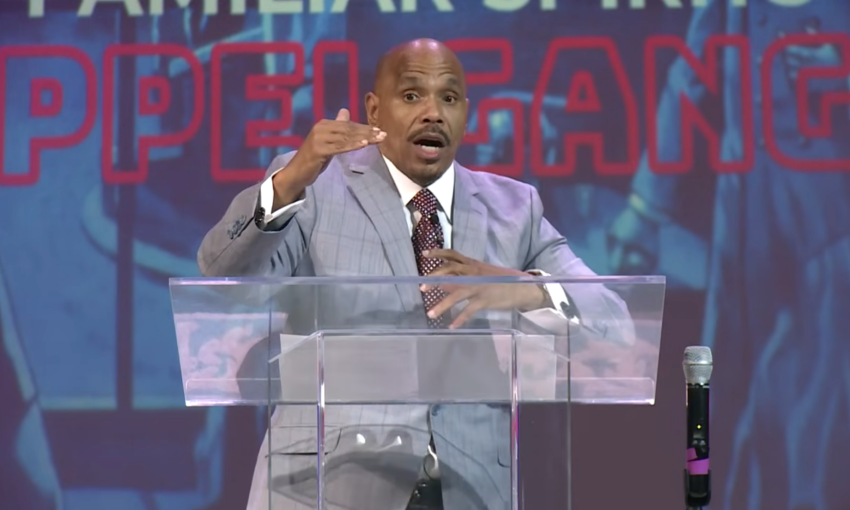
Bloomer, 63, is the founder of Bethel Family Worship Center, a multicultural ministry in Durham, North Carolina. For roughly eight years, from about 2011 until September 2019, he was one of the network’s most recognizable faces, hosting the programs “Rejoice in the Word” and “The First Word” for an audience built largely by Black preachers like him.
Adell, 59, of Bloomfield Hills, Michigan, owns The Word Network. A spokesperson for Adell told reporters after the verdict that he had no comment on the case.
How the $62.2 million breaks down
The jury’s verdict form spells out where the money comes from. Bloomer was awarded $9.2 million in compensatory damages, meant to cover the harm jurors found he suffered, and $51 million in punitive damages, the portion designed to punish conduct and deter it in the future. The form adds a further $2 million for unjust enrichment, an alternative claim that the network had been unjustly enriched by Bloomer’s work. Together, the three figures total $62.2 million.

Of the $51 million in punitive damages, the verdict form assigns $40.8 million to Adell’s nonprofit organization, known as The Word Network or Word Network Church. The defendants in the case were Adell himself, The Word Network Operating Co. and Church of the Word.
The award is not money Bloomer has collected. Like any large federal verdict, the figure can still change through post-trial motions or an appeal, and no payment has been reported. What the verdict establishes, for now, is that a jury heard both sides of a seven-year dispute and sided with the pastor.
The meme that started it all
The case traces back to September 4, 2019. According to court records recounted in a June 2025 federal ruling, two Black employees at the network, Malea Howard and Denise Johnson, showed Adell an online article headlined “Black Gospel Network PIMP Kevin Adell.” The article carried a doctored image: Adell, who is white, dressed like a pimp in a white fur coat in front of a white limousine, with four prominent Black ministers, including Bloomer, depicted beside him at a much smaller size. Critics said the image cast the pastors as his “hoes.”

Adell did not create the image. But according to Bloomer’s testimony, Adell showed it to him at work that day, and Bloomer recalled that Adell “was laughing and he was proud of it.” Later the same day, Adell texted Bloomer the meme along with three messages mocking his height: “You look like a midget,” “A tattoo from fantasy island” and “I didn’t know they made Tuxedos that small,” according to the court ruling. The “Tattoo” reference was to the character played by Hervé Villechaize on the television series “Fantasy Island,” who famously served a character everyone called “Boss.”
Bloomer answered that the image “has a racist connotation” and was “equivalent to a black face being put on a white man.” The messages did not stop there. The next day, Adell texted him a photograph of himself beside a white man whose face had been blacked out with a marker. On September 11, Adell sent a close-up of Bloomer’s face taken from the meme and called him Tattoo again. Bloomer replied, “Not funny!!!!!”
The following day, Adell sent the same picture once more. Bloomer responded that he was asking for the last time: stop playing with him like that, he did not like it. Adell answered “OK!!!!,” “Got it,” “So sensitive” and “WTF,” according to the ruling’s account of the exchanges. In the lawsuit’s complaint, the same confrontation is described in shorter form: Bloomer’s “That’s not funny at all” was met with Adell’s “Lol.”
Two of the network’s own employees backed up how the exchanges landed. Howard said in a sworn declaration that she found Adell’s remarks racist and offensive. Johnson called them racially insensitive, said she watched Adell dismiss Bloomer’s objections on a phone call and hang up on him, and said she believed Bloomer’s race was a factor in the disrespect.
A working relationship breaks down
The meme was the spark, but Bloomer’s case described a wider breakdown. On September 15, 2019, he texted Adell a list of problems at the network. Booked gospel artists, he said, were being treated poorly. Preachers were telling their congregations from the pulpit that the network was run like a plantation. Customers had waited six months for products they had already paid for, and Bloomer said he had personally shipped 1,700 late packages at his own expense. Adell replied at the time that the plantation comparison had made him angry.

In his deposition, Adell testified that he probably asked someone to check how much airtime Bloomer had so that he could take some of it away. He called restricting a preacher’s airtime “the whip.” Bloomer’s attorneys argued that the threat to cut his airtime after he complained was retaliation, and jurors ultimately agreed with the broader retaliation claim.
Bloomer also testified about a phone call that night in which, he said, Adell turned the meme’s language back on him, asking, “If I’m your pimp where’s my money? Bring me my money!” Bloomer said he answered, “I’m out.” He testified that Adell mocked him for quitting and offered to drive him to a rival network in a Rolls-Royce, using a racial slur in the offer. Adell disputed parts of Bloomer’s account of that call. The next day, Bloomer texted that he was taking time off from the network, and he never returned.
The fallout quickly spread beyond the two men. Black pastors protested, a petition calling for a boycott of the network drew thousands of signatures, and the Detroit chapter of the National Association of Black Journalists condemned what it called a “tone deaf, racist meme.” Adell initially threatened legal action over the journalists’ statement, saying it defamed him, and he has long denied that race played any role in the split. In 2019 he told The Christian Post that Bloomer had left because he wanted more airtime, noting that more than 95 percent of his roughly 160 employees were African American. The lawsuit’s complaint says Adell also claimed at one point that Bloomer had been fired for misappropriating network funds. His lawyers argued before trial that the pastor had left voluntarily, for reasons unrelated to race.
In early November 2019, Adell reversed course publicly. In a statement to The Christian Post, he said the image was not his creation and did not reflect his character, and he addressed Bloomer directly: “I apologize profusely.” By then, however, Bloomer was gone, and the dispute was heading toward court.
Seven years from text message to verdict
Bloomer and his ministry, GG Bloomer Ministries, filed suit on October 12, 2022, in the U.S. District Court for the Eastern District of Michigan. The case was brought under Section 1981 of the Civil Rights Act of 1866, the Reconstruction-era law that bars racial discrimination in making and enforcing contracts.
The case survived its biggest legal test well before trial. In a ruling issued June 4, 2025, U.S. District Judge Nancy G. Edmunds sent most of the case forward for a jury to decide. She wrote that Adell’s use of the meme to taunt Bloomer after being told it was racist “is direct evidence of racial animus,” and that there was “no dispute that the meme and the blackface photo are racist tropes.” The “whip” remark, she wrote, was “a clear reference to how masters disciplined slaves.” She also found that a reasonable jury could conclude Bloomer had been forced to resign.
Judge Edmunds did narrow the financial side. She dismissed Bloomer’s contract claim over commissions on the network’s Bibles and anointing oil, but allowed his contract claim involving his own books to proceed, along with the unjust-enrichment claims that produced the $2 million portion of the verdict.
What happens next
A verdict of this size rarely ends a case on the day it is read. Adell’s side can ask the trial court to set the award aside or reduce it, and can appeal to a higher court, steps that typically take months or longer. His spokesperson’s only public response so far has been to decline comment. There has been no announcement of a settlement, and no report that any part of the $62.2 million has been paid.
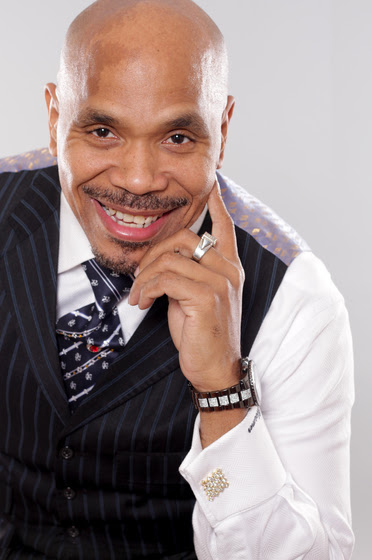
Bloomer, meanwhile, has continued the work he was doing before the dispute. He was preaching at his Durham church in early October 2026, days before the jury delivered its verdict. On September 12, 2019, he had sent Adell what he called his last request to stop: “I told you I do not play games with my name or my character.” Seven years later, a federal jury in Detroit agreed that the line he drew had been crossed, and put a $62.2 million figure on what crossing it cost.
About the Author